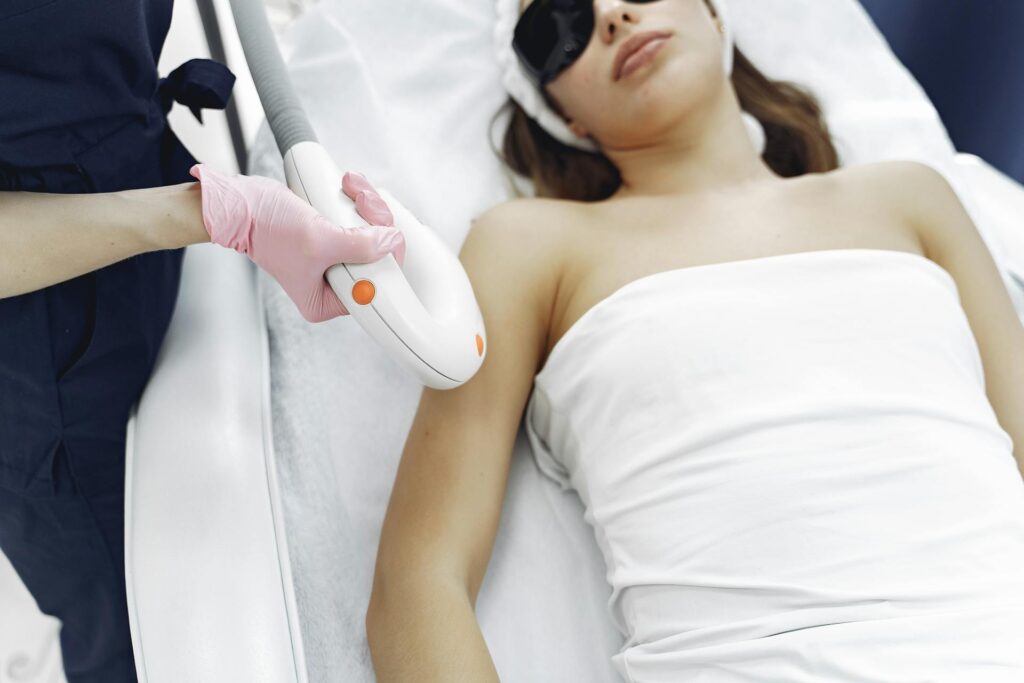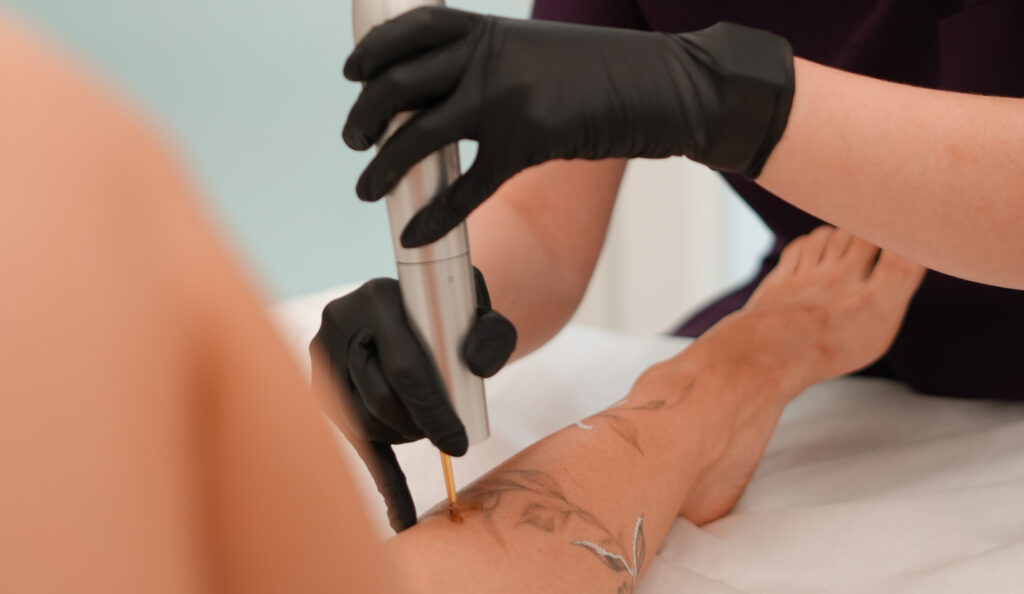


Are you wondering whether your unwanted tattoo will disappear instantly, or if you are in for a longer process? It is completely natural to ask about a specific number of sessions. Manufacturers of advanced picosecond equipment estimate a series of about 4–6 treatments for well-executed, professional tattoos with stable pigment and predictable depth.
However, the reality in the clinic is often different: most frequently, we deal with amateur, homemade, repeatedly touched-up, or heavily scarred tattoos whose ink composition and depth of placement are unpredictable. That is why we approach every single case individually.
What determines the number of sessions?
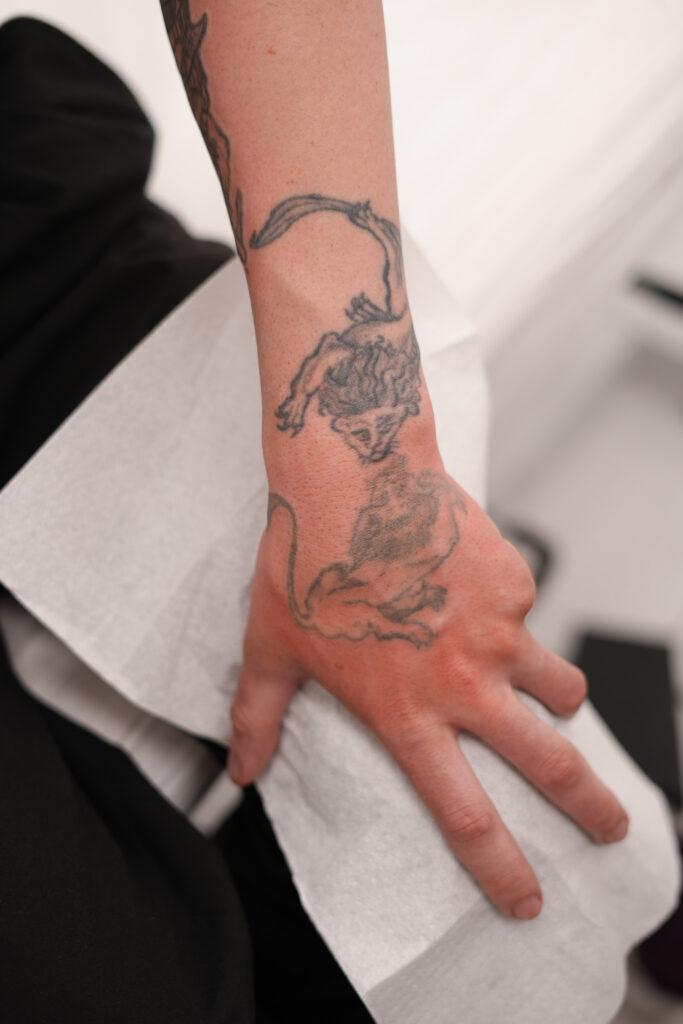
- Tattoo type and quality of application: Professional tattoos are made with stable ink placed at an appropriate depth, making the removal process highly predictable. It is quite different in the case of amateur, homemade, or repeatedly touched-up tattoos—their chemical composition and uneven depth of ink placement significantly prolong the process.
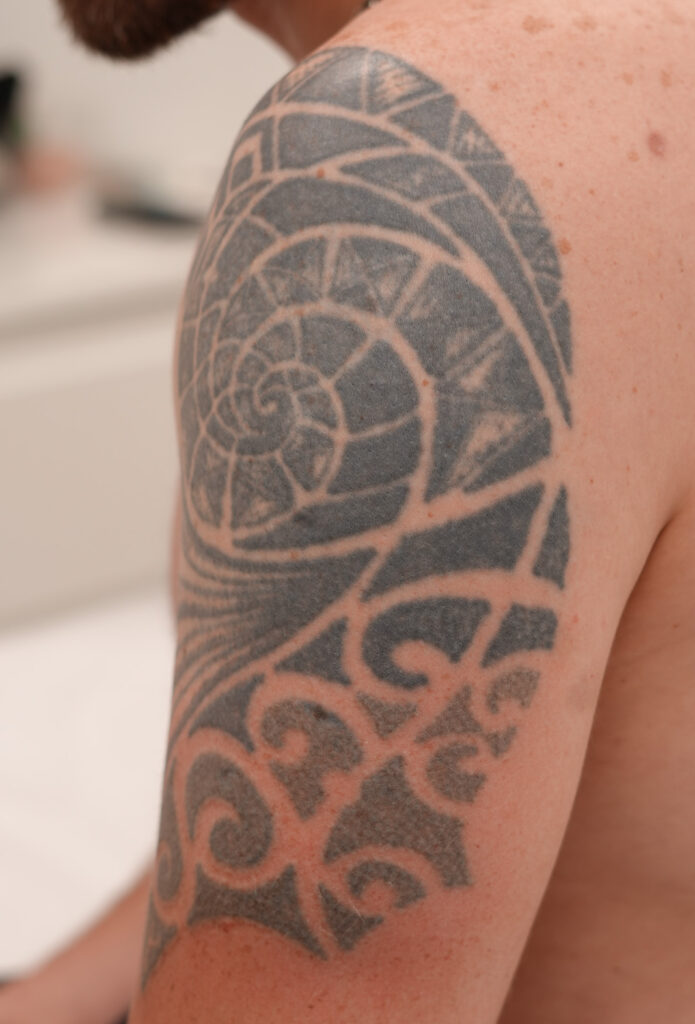
- Ink density and depth: Blackwork-style tattoos with heavy, dense saturation require a significantly longer treatment cycle than fine outlines.
- Color spectrum: Dark pigments (especially black) respond the fastest. More challenging colors (shades of green, blue, or yellow) can be effectively removed, but they may require a higher number of sessions.
- Individual body response: The laser breaks the pigment particles into fine dust, but it is actually the immune cells that eliminate them from the body. Therefore, lifestyle, hydration, and overall immunity directly affect the rate at which the skin clears.
How do we realistically assess progress in the clinic?
At Nemezink Recovery, we verify progress and the number of sessions based on specific stages of therapy:
- Assessment at the first session: During this treatment, we observe how the skin and pigment respond to the laser pulse. We evaluate the immediate pigment reaction as well as whether the tattoo shows any signs of laser resistance.
- Assessment at the second session: This is a key moment where we determine what percentage the tattoo has faded, allowing us to establish the further plan. For example, if after the first session a fading of about 20% is visible, we can realistically predict that about 4 more sessions will be needed for complete removal (giving us a total of 5 visits).
Why must the process be spread out over time?
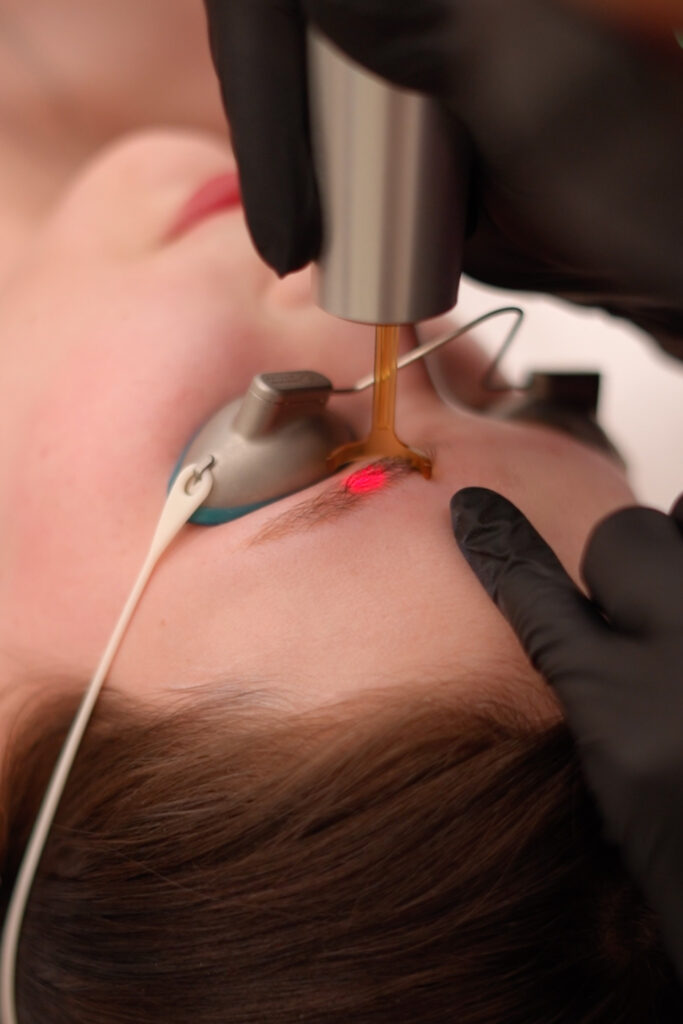
Many patients ask whether the treatments can be performed more frequently to get rid of the tattoo faster. The answer is no. Safety and physiology are key. The laser works in layers, and the body needs time to regenerate and transport the shattered ink particles through the lymphatic system. Maintaining safe intervals prevents overloading the skin and ensures the full effectiveness of macrophages.
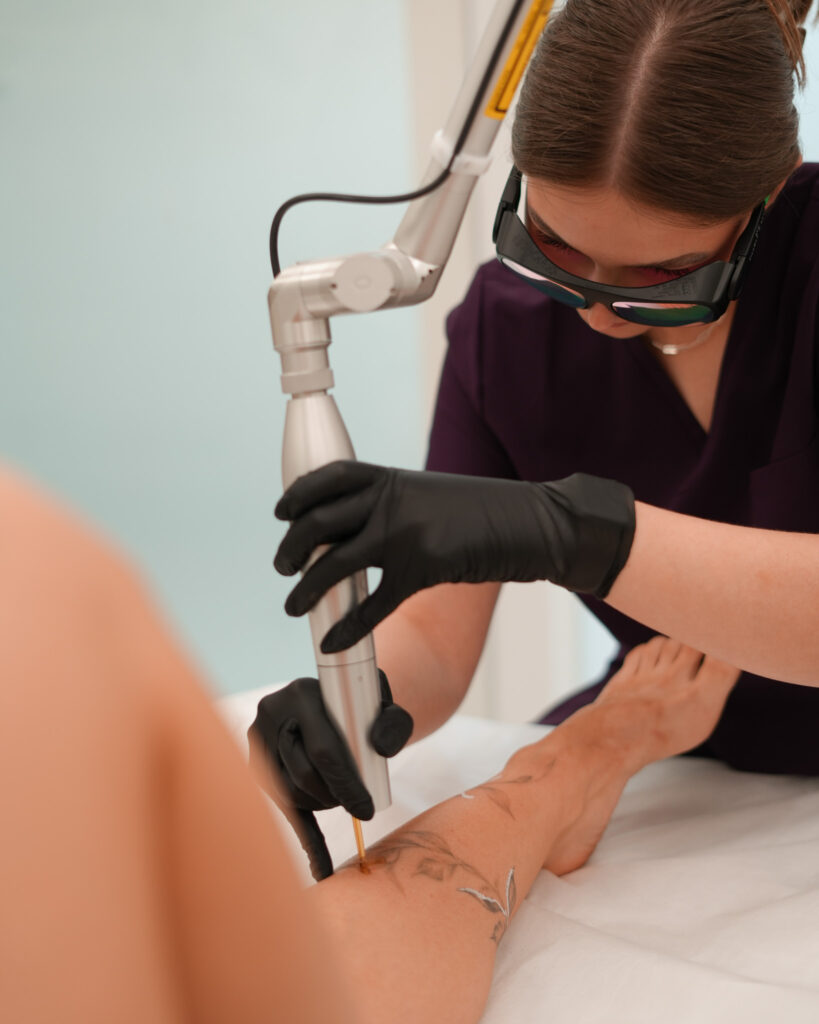
Are you wondering how the tattoo removal process will look in your case?
Sign up for a free consultation 🙂
Sources:
Bernstein, E. F., Schomacker, K. T., Basilavecchio, L. D., & Eadie, N. (2015). A novel dual-wavelength, Nd:YAG, picosecond-domain laser safely and effectively removes multicolored tattoos. Lasers in Surgery and Medicine, 47(7), 542–548.
Friedman, P. M., Jaka, F., & Geronemus, R. G. (2015). The use of a picosecond-domain laser for the treatment of tattoos. Journal of the American Academy of Dermatology, 72(2), 312–315.
Lorgé, K., & Babilas, P. (2018). Laser-assisted tattoo removal: State of the art. Journal der Deutschen Dermatologischen Gesellschaft, 16(5), 589–598