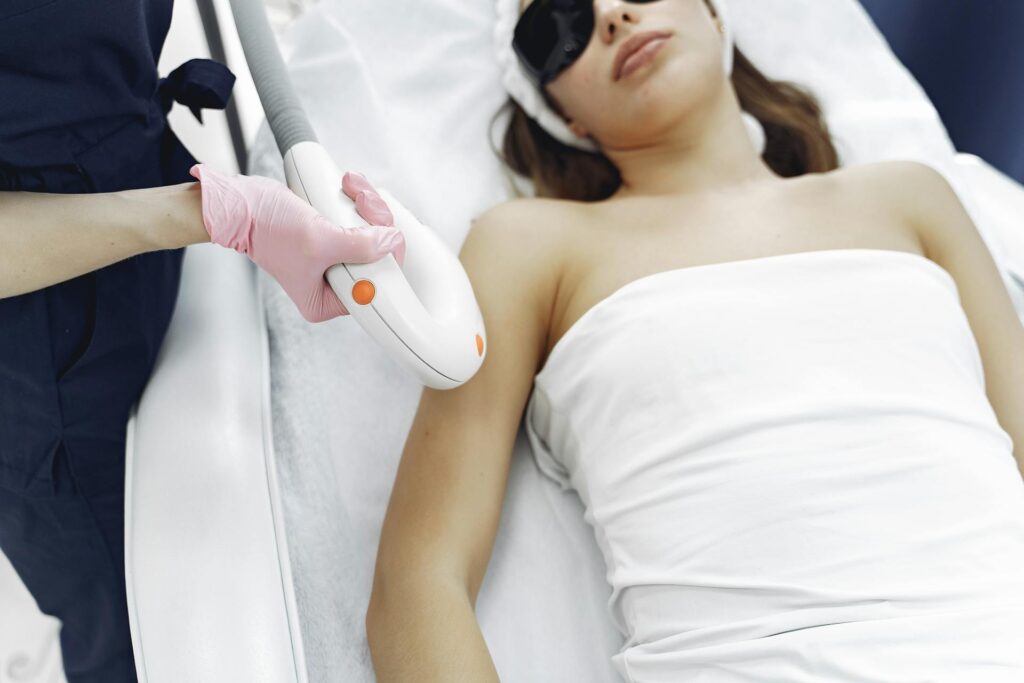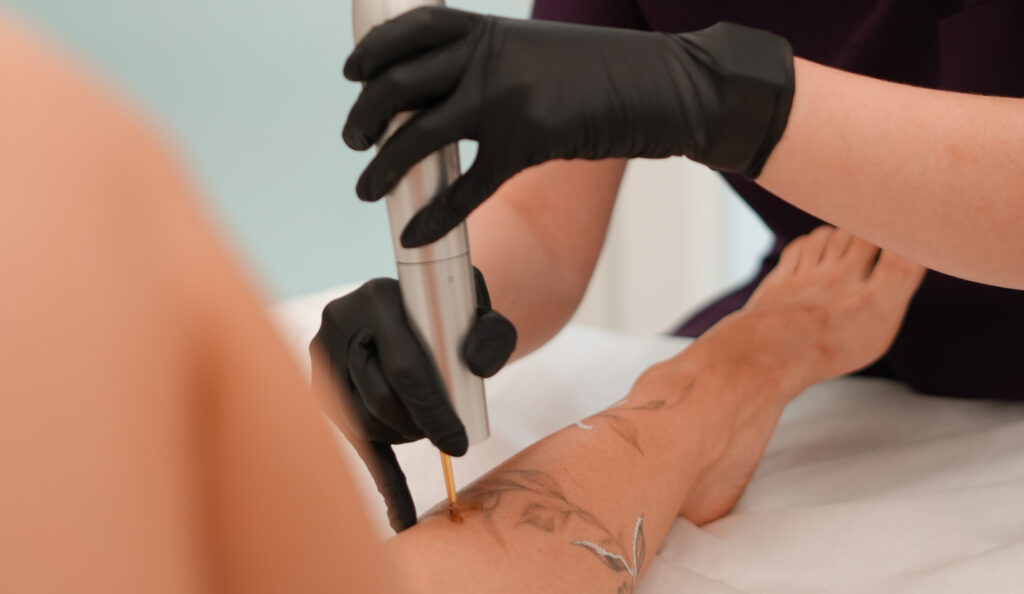


Planning to remove a tattoo or want to lighten an old design for a new cover-up, but wondering if your case even qualifies for the procedure? This is one of the most frequently asked questions we hear at the clinic. We are quick to answer: modern technology gives us huge possibilities, but how smoothly the entire process will go depends on the type of tattoo, colors, and the equipment we work on.
At Nemezink Recovery, we go for the best – the Candela picosecond laser. Check out how it handles various challenges on your skin.
Tattoo type and its reaction to the laser.
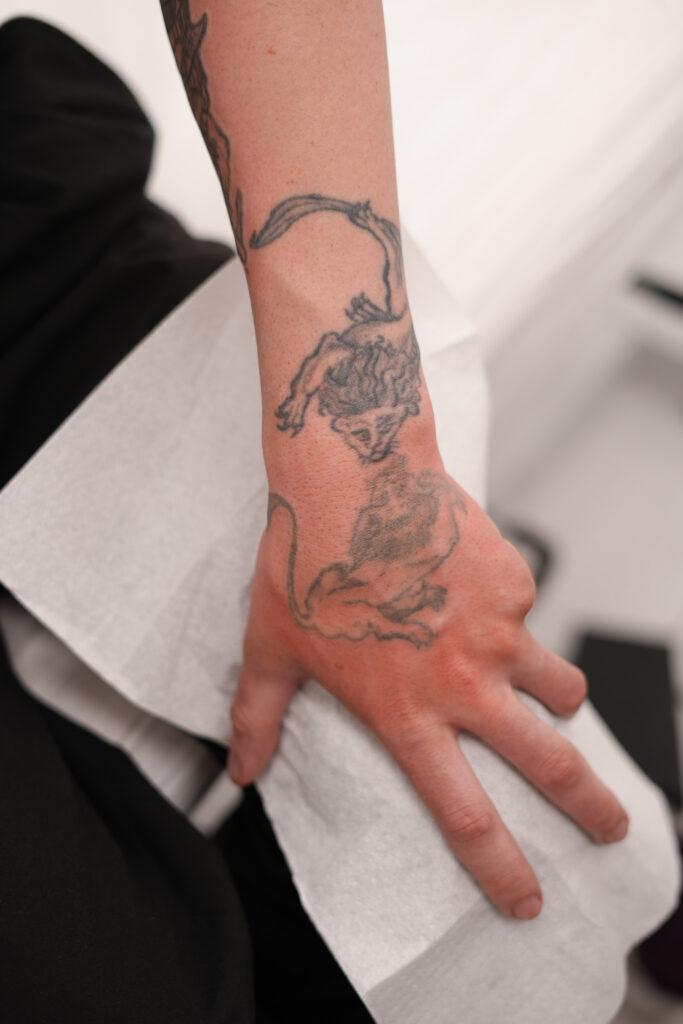
How and when your tattoo was made directly influences how it will react during the procedure. We can distinguish 3 groups of tattoos here:
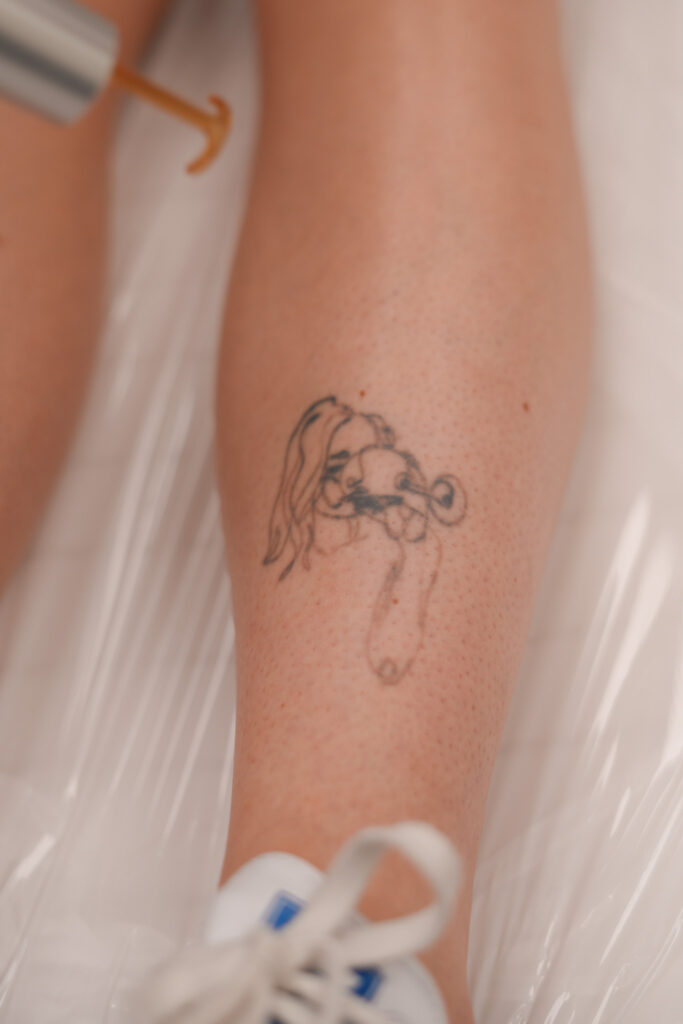
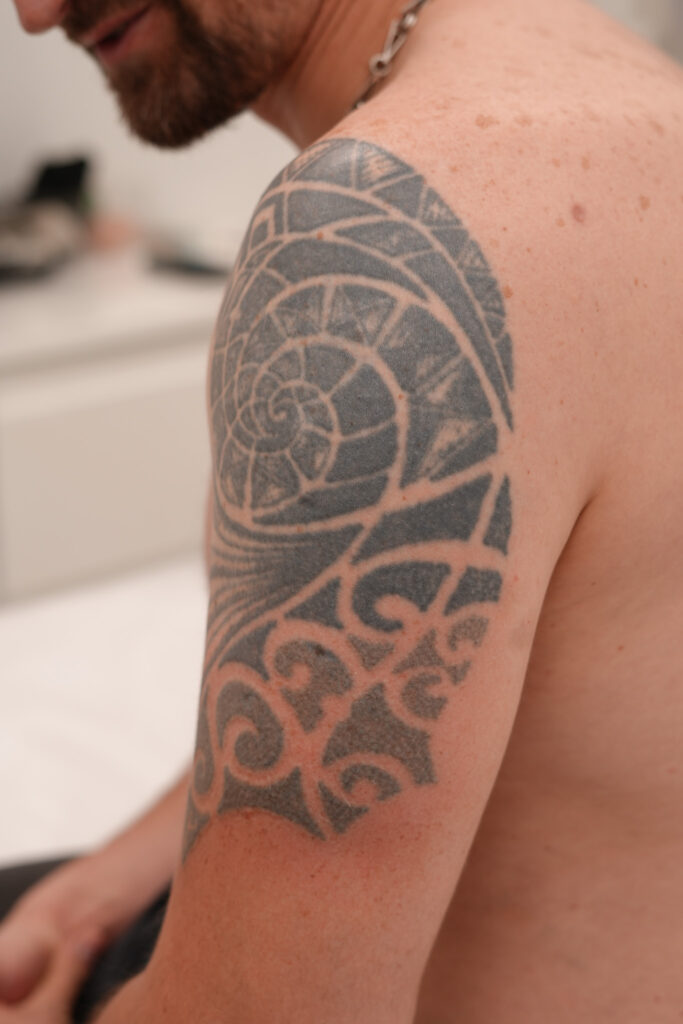
- New, untreated tattoos; they have healthy and pliable tissue, making them respond well to laser treatment. They usually react very strongly and clearly right from the first shots.
- Old, “overworked” and repeatedly touched-up tattoos; they often hide scar tissue or ink injected too deeply. During the first session, they may react more mildly, and instead of a classic whitening effect, they will darken.
- Cover-ups; if you have a “tattoo on a tattoo” on your skin, there is a double amount of pigment there, which naturally extends the removal process and requires more sessions.
How does the laser react to individual colors?
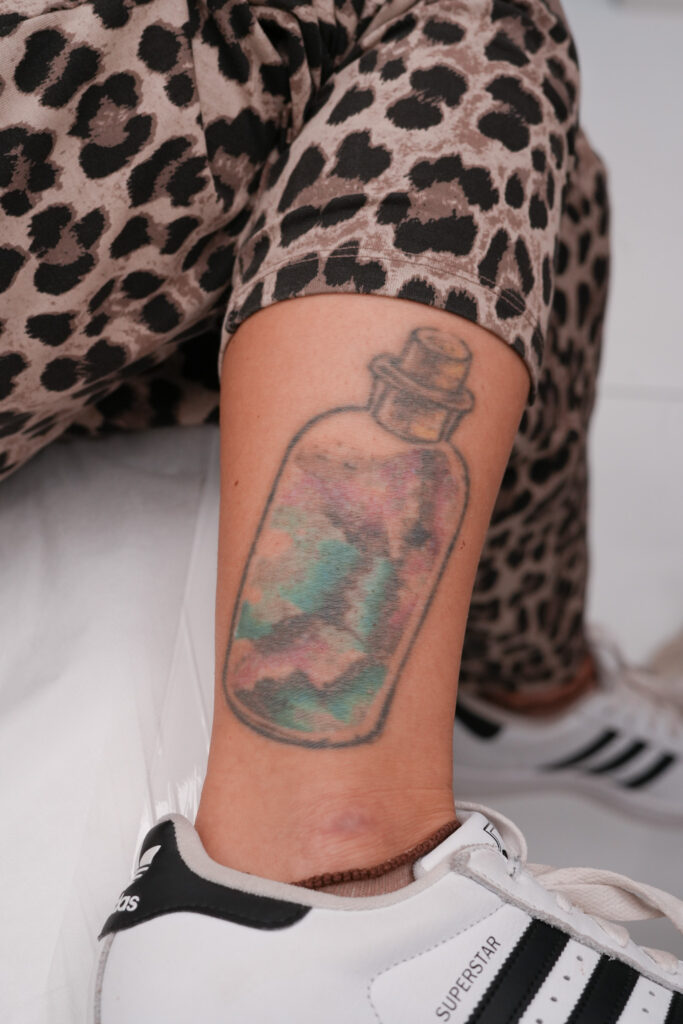
Each color in a tattoo is a completely different chemical substance with varying photostability and different light absorption properties. Therefore, removing a multi-colored tattoo requires the use of appropriate wavelengths, which can naturally extend the total removal process.
You are probably wondering what the situation looks like with specific colors; below you will find a breakdown of the most commonly encountered tattoo pigments.
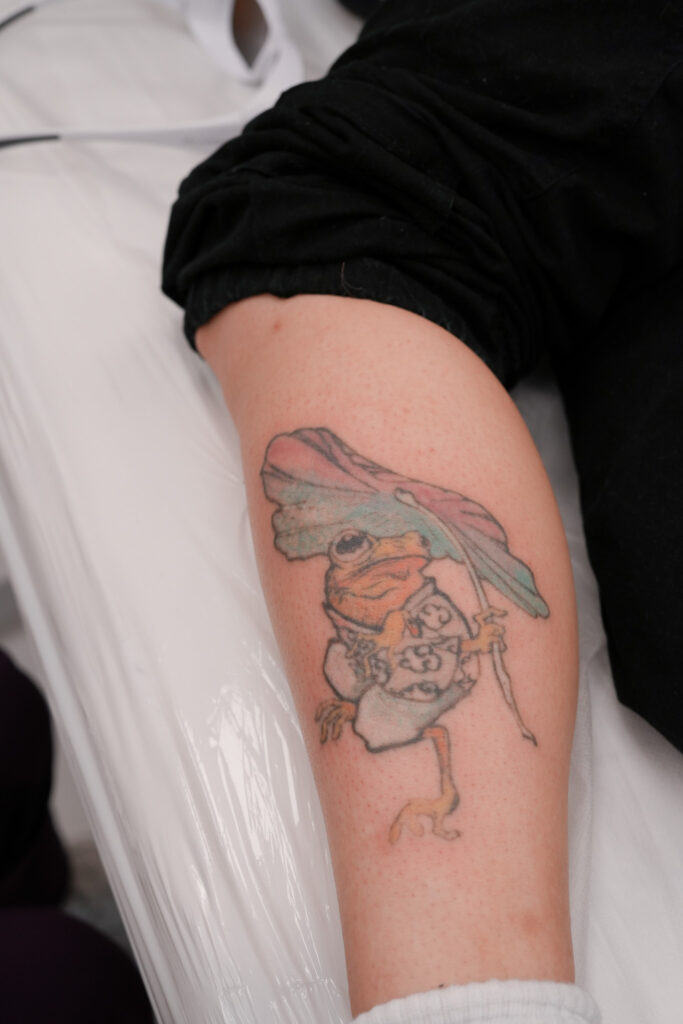
- Black and dark brown: A classic that absorbs practically every laser wavelength. It is the easiest and fastest-reacting pigment.
- Red and orange: they react very well to laser light of an appropriate wavelength.
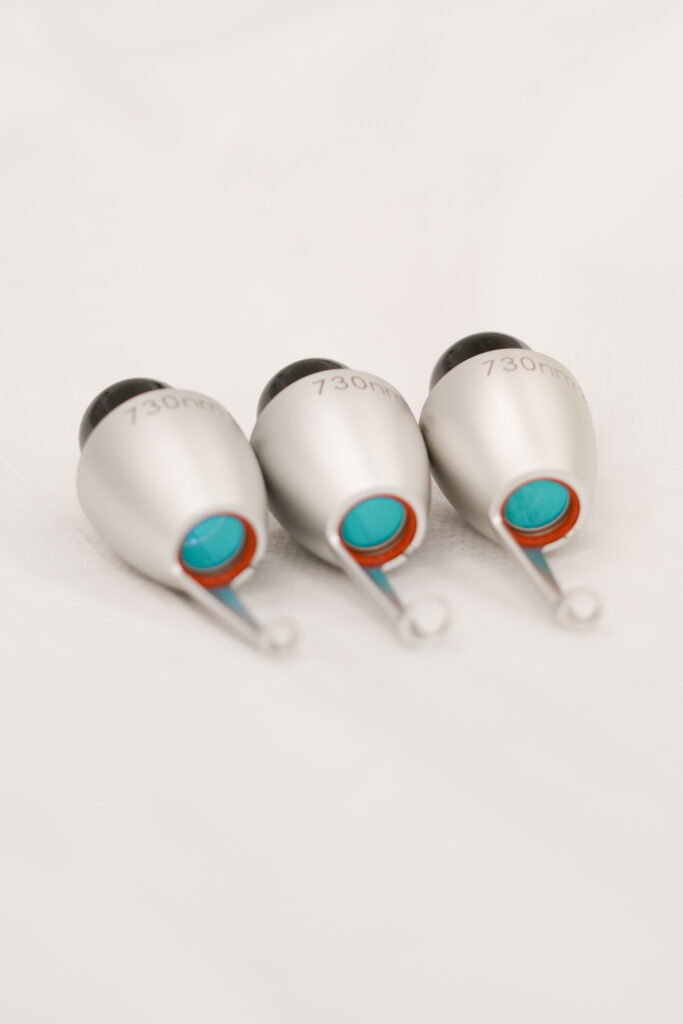
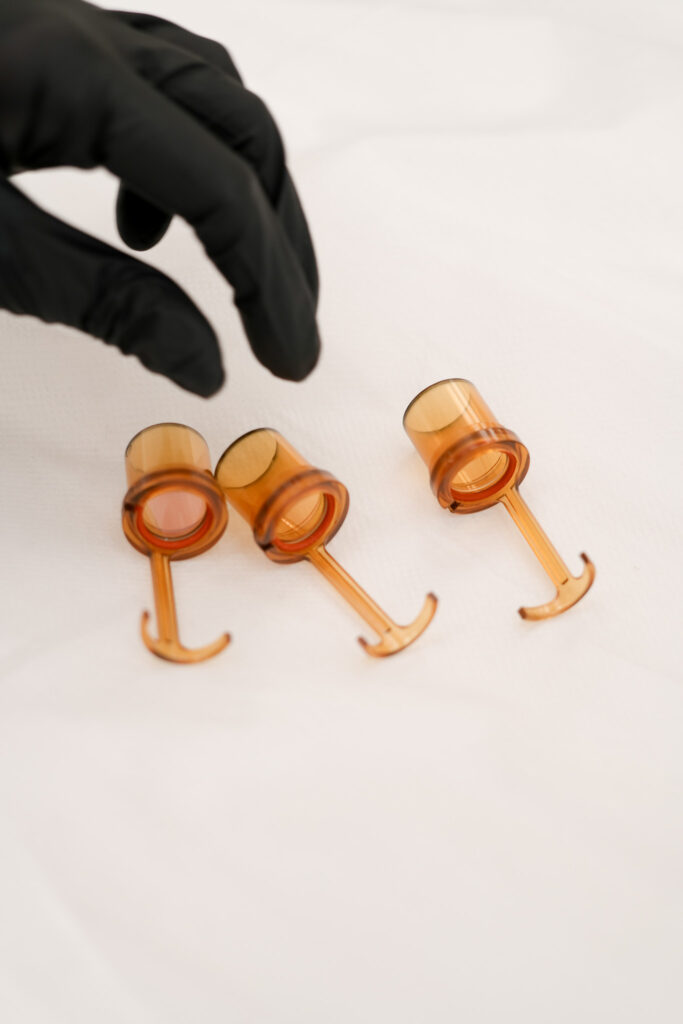
- Green and blue: these two colors posed a challenge for older technologies for a long time. Fortunately, here we have a special handpiece that generates a dedicated wavelength designed specifically for these shades.
- Yellow and light shades: yellow pigment stands out with a specific chemical structure and very high photostability. It absorbs standard laser light very poorly, making it one of the most difficult pigments to remove. Breaking it down requires patience and precise adjustment of the laser technology.
Why does Candela make such a big difference?
It generates ultra-fast photoacoustic pulses that act like a shock wave. It does not excessively heat the tissue, but instead breaks down even difficult pigment particles (such as green or yellow) into microscopic dust. Additionally, it uses a precise wavelength, which allows it to reach various pigments at the appropriate depths of the skin. During the procedure, tissue protection is equally important, and thanks to the ultra-short pulse, we minimize the risk of scarring, which is crucial during multiple sessions on difficult colors.
What happens to the pigment after the shot?
When the laser breaks down the ink accumulated in the skin into tiny particles, your immune system steps in. The pigment particles are gradually captured and naturally eliminated from the body through metabolic pathways. That is why this procedure requires patience; the first effects may appear even 3-4 weeks after the treatment day, depending on the body’s predispositions. However, because we rely on natural processes, this procedure is not invasive for you or overly noticeable during the recovery period.
Can every tattoo be removed?
Returning to the title question, thanks to the use of advanced picosecond technology, we are able to effectively remove or significantly lighten the vast majority of tattoos, regardless of whether they are black classics or multi-colored, demanding designs.
If you have any questions about your tattoo, contact us or drop by Nemezink Recovery for a consultation where we will discuss your case in more detail!
Sources:
– Qu, Y., Feng, X., Liang, J., Liu, J., Gao, D. (2021). The picosecond laser effects on tattoo removal and metabolic pathways. Clinical, Cosmetic and Investigational Dermatology, 14, 1343–1350.
– Cecchetti, D., Bauer, E. M., Guerriero, E., Sennato, S., Tagliatesta, P., Tagliaferri, M., Cerri, L., & Carbone, M.(2022). Comparative treatments of a green tattoo ink with Ruby, Nd:YAG nano- and picosecond lasers in normal and array mode. Scientific Reports, 12, Artykuł 3571.
– Hauri, U., & Hohl, C. (2015). Photostability and breakdown products of pigments currently used in tattoo inks. W: J. Serup, N. Kluger, & W. Bäumler (Red.), Tattooed Skin and Health (Current Problems in Dermatology, Vol. 48, pp. 164–169). Karger.
– Kirby, W., Desai, A., Desai, T., Kartono, F., & Patel, G. (2009). The Kirby-Desai scale: A proposed scale to assess tattoo-removal treatments. The Journal of Clinical and Aesthetic Dermatology, 2(3), 32–37.