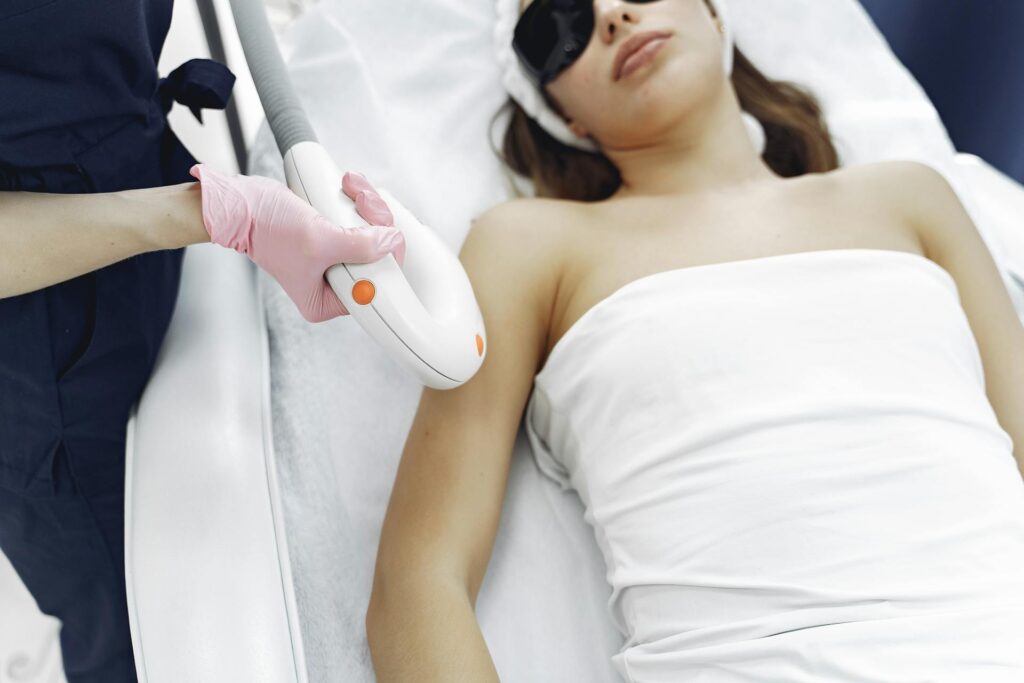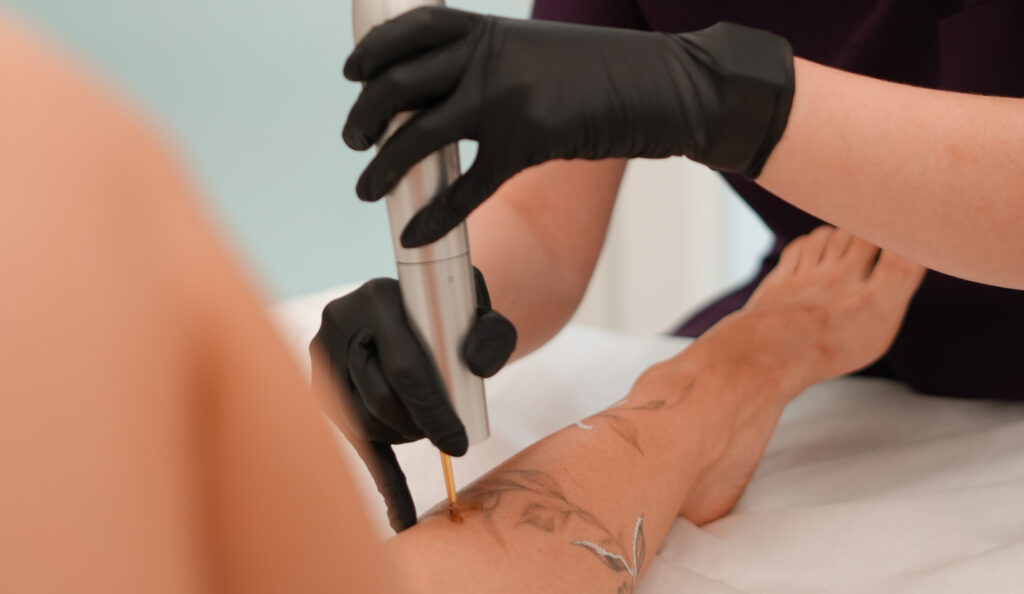



In a properly performed treatment, the laser energy is selected to target primarily the pigment particles while minimizing damage to the surrounding tissues as much as possible. The body then gradually removes the fragments of the broken-down pigment. The skin undergoes a healing process after the procedure, which is why temporary reactions may occur, such as redness, swelling, tenderness, and in some cases, blisters or scabs. Their occurrence in itself does not mean that a scar will form.
Therefore, how do scars form after laser tattoo removal?
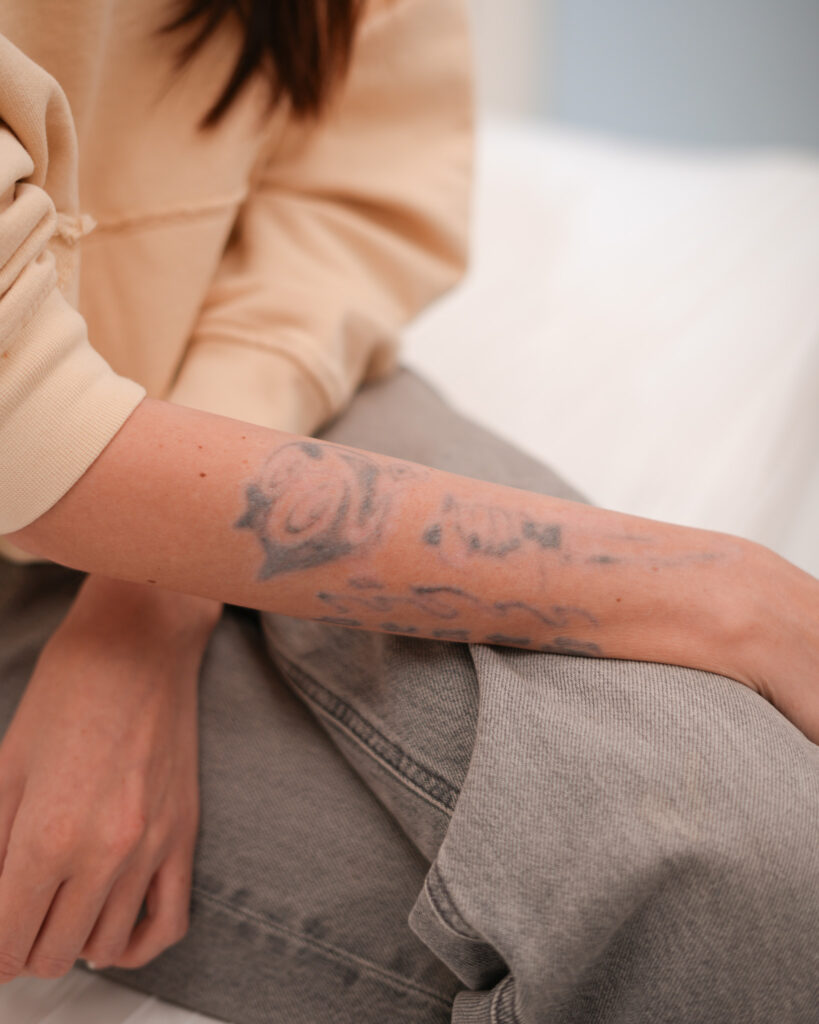
A scar forms when the skin damage is deep enough that its original structure is not fully restored during the healing process. The body repairs the damaged tissue, among other ways, through the production and remodeling of collagen fibers. Consequently, scar tissue may remain at the site of a deeper injury.
What increases the risk of scarring?
What increases the risk of scarring? The risk of scarring is primarily increased by overly intense treatment parameters, too short intervals between sessions, picking at scabs, damaging or puncturing blisters, and infection of the treated area.
How to reduce the risk of scarring?
The risk of scarring after laser tattoo removal can be significantly reduced. Proper qualification for the procedure, appropriately selected laser parameters, the experience of the person performing the procedure, and proper skin care during the healing period are of key importance.
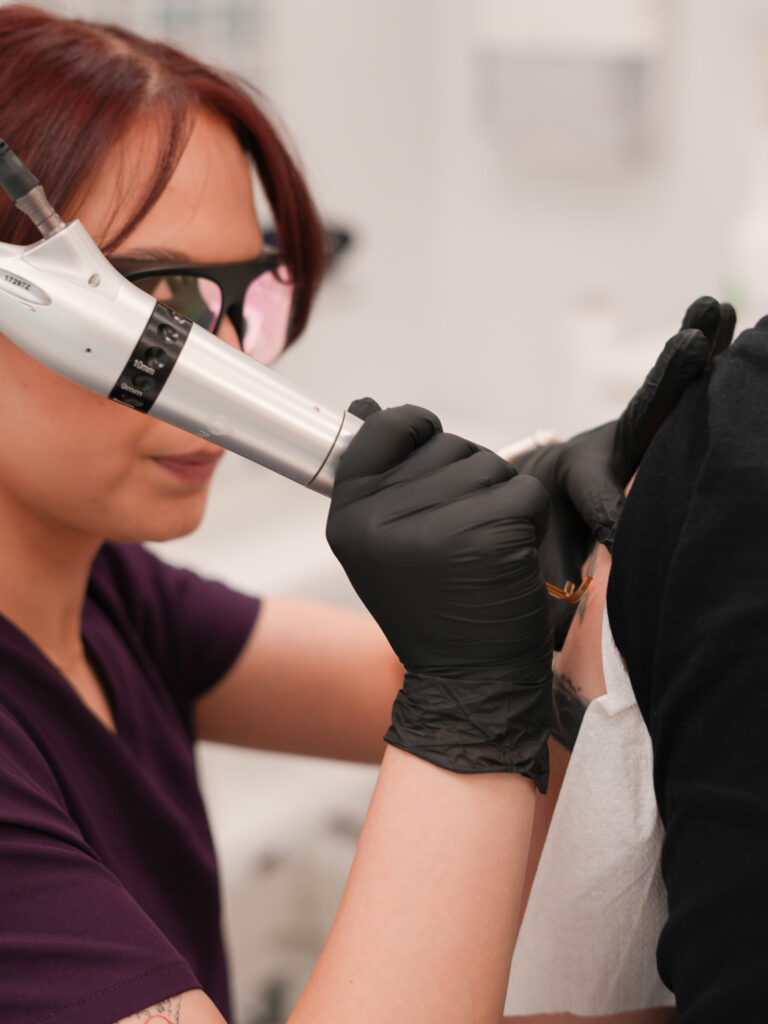
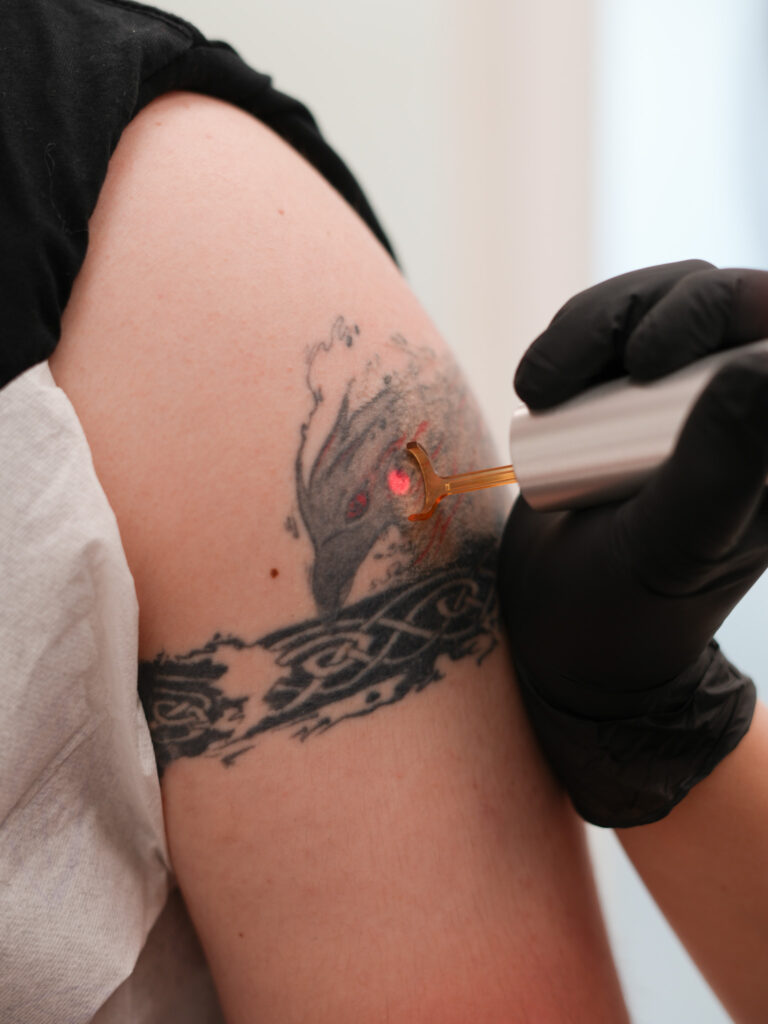
In our salon, treatments are performed by qualified specialists, and each tattoo is subject to individual evaluation before therapy begins. We take into account, among other things, the condition of the skin, the saturation of the pigment, the location of the tattoo, and the skin’s reaction to previous sessions.
An important role is also played by the technology of the equipment used. We work with a modern picosecond laser, whose ultra-short pulses allow for effective action on the pigment while limiting the thermal effect on the surrounding tissues. Appropriate technology combined with the proper selection of parameters is of great importance for both the effectiveness and safety of the entire process.
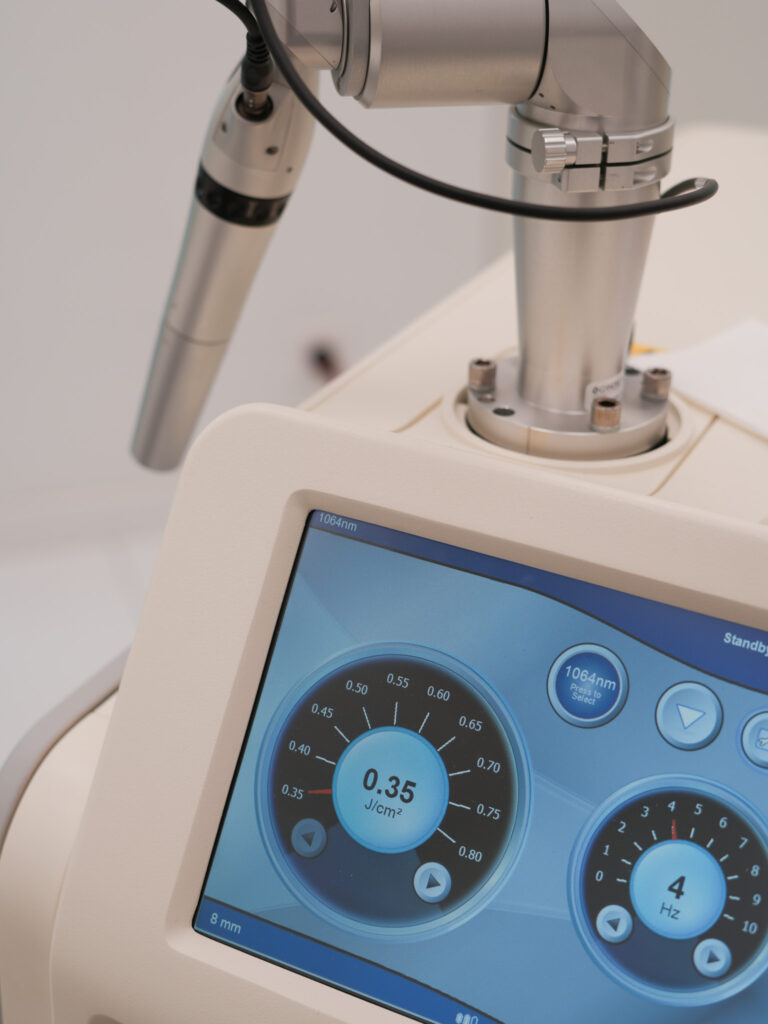
Equally important is the time left for the skin to regenerate. Subsequent sessions are performed with appropriate intervals, and after each treatment, we provide recommendations regarding the care and protection of the treated area.
Safe tattoo removal is a combination of appropriate technology, the knowledge and experience of a specialist, and proper post-treatment care. Each of these elements is important for proper skin healing and minimizing the risk of scarring.