

Do you run your finger over your tattoo and clearly feel its contours under your fingertip? Do you get the feeling that the ink is literally “raised” above the rest of your skin? This is one of the most common scenarios we encounter during initial consultations.
Most people worry that a tattoo like this can’t be removed and that traces of ink will remain in the scar. However, it isn’t always a scar—sometimes it turns out to be an excess of ink under the skin. During an initial assessment, we often can’t tell for sure which of these options applies to your case.
Option 1 — Ink Overload
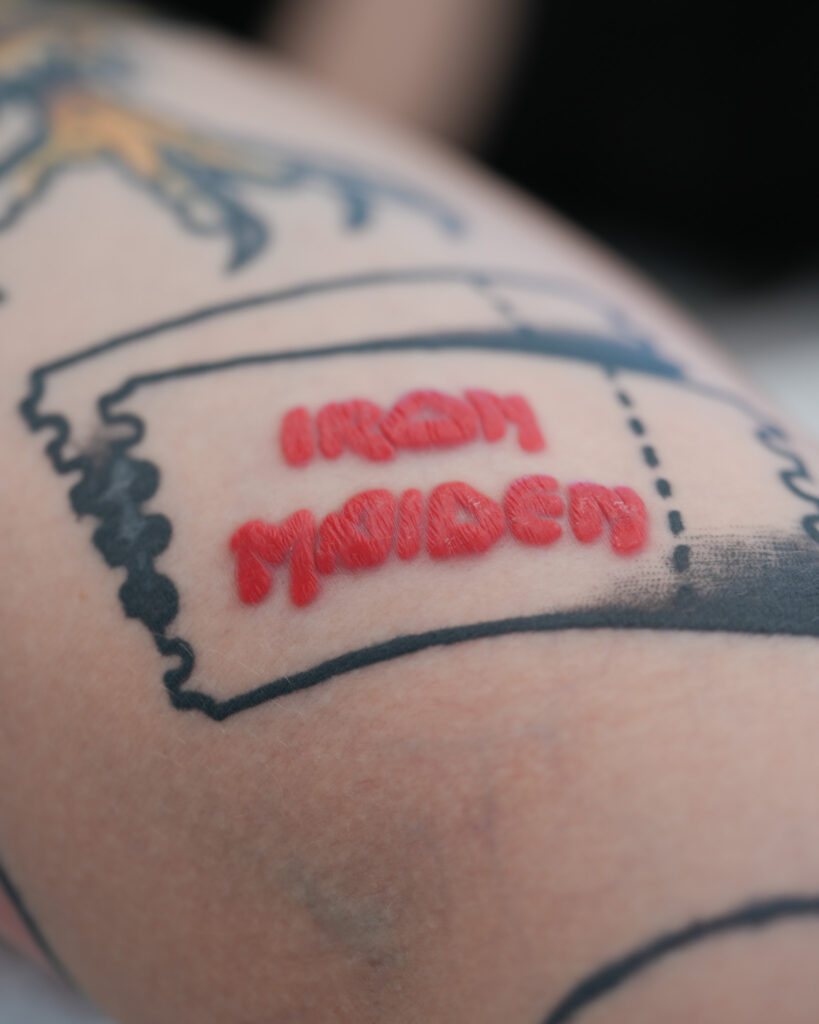
If the raised texture is purely due to the tattoo artist packing a massive amount of dense pigment into one spot, laser treatments might surprise you. Most clients expect the design to lighten right away, but the laser beam actually breaks down the dense ink deposits first. As the lymphatic system clears them away, the tattoo loses its raised texture session by session and becomes completely flat, even though visually it doesn’t lighten significantly. Visible fading only begins once we reduce this physical mass of pigment under the skin.
Option 2 — Scar Tissue
If the tattoo artist worked too aggressively or went too deep with the needle, the raised texture is the result of tissue damage and an overproduction of collagen. In this case, the removal process encounters a dual obstacle:
- Restricted laser access to the pigment:
The dense, scarred collagen structure acts like a shield. It scatters the light beam and physically blocks the laser from reaching pigment particles that are tightly trapped deep within the fibrotic tissue. - Impaired clearance of shattered ink:
Even when the photomechanical wave manages to shatter the ink inside the scar, macrophages struggle significantly to penetrate this dense barrier to transport the pigment to the lymphatic system
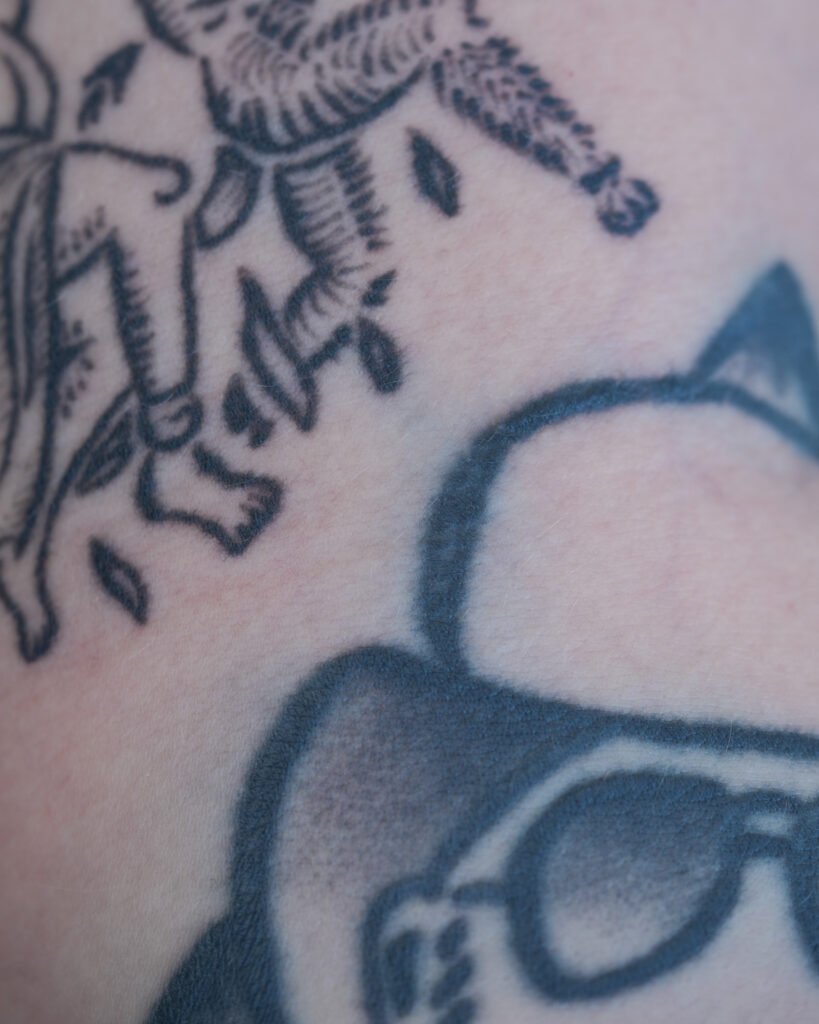
Because of this, working with scarred tissue is unpredictable. It is impossible to guarantee in advance to what degree the pigment can be broken down and fully cleared—subtle, grayish shadows may remain in the skin. Furthermore, while the laser eliminates the pigment, it does not remove the scar structure itself, which is why a raised, skin-colored mark may remain once the ink is cleared.
How We Work with Raised Tattoos at Nemezink Recovery
We take a flexible approach to every raised tattoo, carefully observing how the tissue responds after the initial laser pulses. Our primary goal is to safely break down and clear as much pigment from beneath the skin as possible.
Want to find out how your tattoo will respond to a picosecond laser? Book a consultation at Nemezink Recovery — we will assess your skin’s condition and tailor a safe treatment plan.